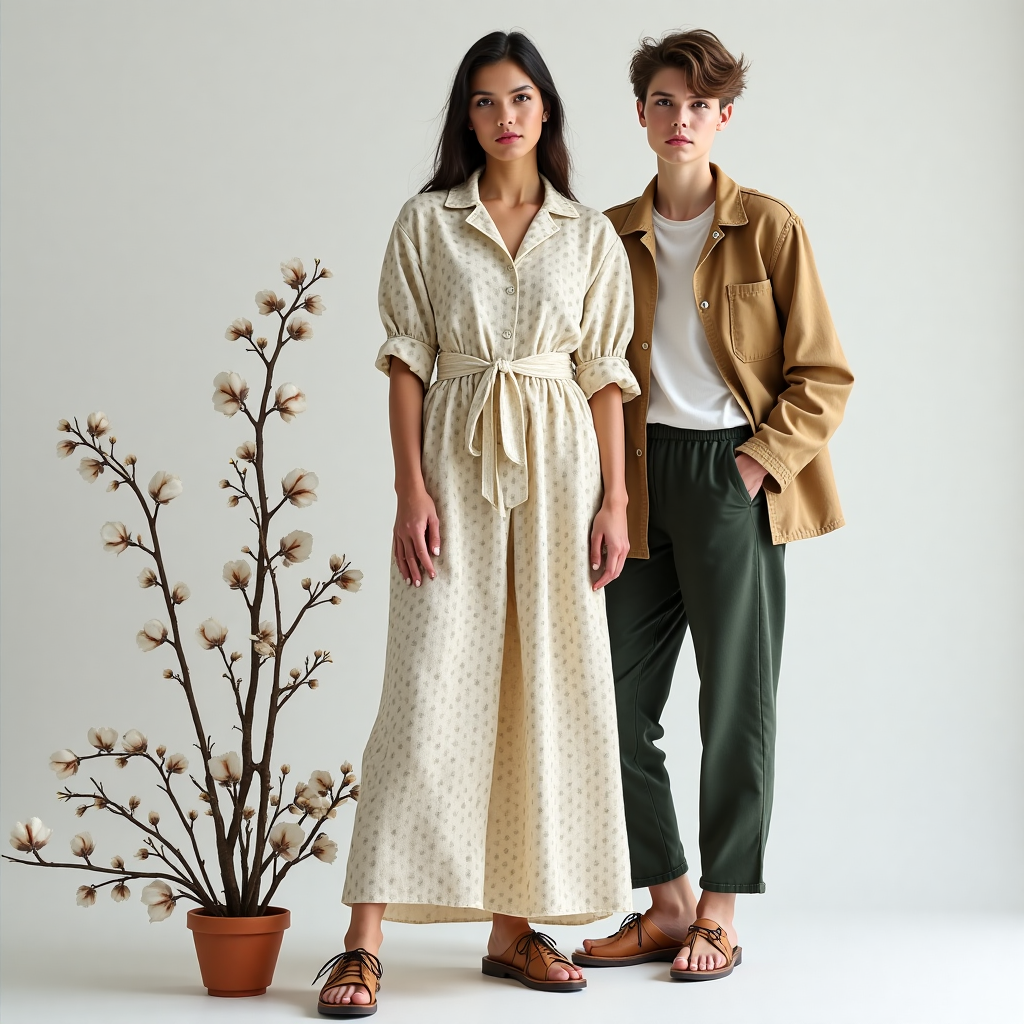
For decades, the fashion industry has operated on a simple but destructive premise: take raw materials, turn them into clothing, sell them quickly, and encourage consumers to discard them when the next trend arrives. This linear model has given us overflowing landfills, polluted waterways, and a growing sense of unease about the true cost of what we wear. But a new narrative is taking shape. It is built around sustainable fabrics, organic cotton, deadstock materials, circular fashion, and the explosive growth of resale. Together, these ideas are not just changing how clothes are made; they are transforming how we think about ownership, value, and the lifecycle of every garment we touch.
Understanding these concepts is no longer a niche pursuit for eco-conscious insiders. It has become essential knowledge for anyone who wants to build a wardrobe that respects both people and the planet. In this article, we will explore each of these pillars in depth, explain how they connect, and offer practical guidance on how you can participate in fashion’s most important shift in generations.
The Rise of Sustainable Fabrics
At the heart of the sustainable fashion movement is the material itself. A fabric’s environmental footprint is determined by how it is grown or produced, how it is processed, dyed, and finished, and what happens to it at the end of its useful life. Conventional fabric production often relies on synthetic pesticides, toxic dyes, and fossil-fuel-based fibers that shed microplastics into our oceans. In contrast, sustainable fabrics aim to reduce environmental harm while maintaining quality, durability, and comfort.
There is no single perfect sustainable fabric. Instead, the term covers a broad spectrum of materials that perform better than conventional alternatives in areas such as water use, chemical inputs, carbon emissions, biodegradability, or recyclability. The best choice often depends on the specific garment, climate, and intended use. However, the common thread is a commitment to lower impact and greater transparency.
What Makes a Fabric Sustainable?
Several factors determine whether a fabric can genuinely be described as sustainable. These include the source of the raw material, the energy and water required for processing, the chemicals used in dyeing and finishing, the durability of the final textile, and its end-of-life options. A fabric that is biodegradable but requires enormous amounts of water may not be sustainable in water-scarce regions. Likewise, a recycled fiber that sheds microplastics still presents environmental challenges. True sustainability requires a holistic view of the entire supply chain.
- Renewable or recycled inputs: Fabrics made from rapidly renewable plants, agricultural waste, or recycled materials reduce the need for virgin resources.
- Low-impact processing: Closed-loop systems that recapture water and chemicals, or dyeing methods that use less water and non-toxic colorants, are key.
- Durability and longevity: A fabric that lasts for years and withstands repeated wear reduces the need for replacement.
- End-of-life potential: Biodegradable or easily recyclable textiles help close the loop rather than ending up in landfill.
Leading Sustainable Fabric Innovations
Designers and manufacturers now have access to a growing toolkit of sustainable materials. Some are ancient fibers rediscovered for modern use, while others are high-tech innovations developed in laboratories.
- Lyocell (TENCEL™): Made from sustainably harvested wood pulp, lyocell is produced in a closed-loop process that reuses almost all solvents and water. It is soft, breathable, and biodegradable.
- Hemp: A fast-growing crop that requires little water and no synthetic pesticides. Hemp fabric is durable, naturally resistant to UV light, and becomes softer with each wash.
- Linen: Derived from the flax plant, linen is strong, breathable, and biodegradable. It can be grown with relatively low water and chemical inputs compared to conventional cotton.
- Recycled polyester: Made from post-consumer plastic bottles or discarded textiles, recycled polyester reduces dependence on virgin petroleum. However, it still sheds microplastics, so it is best used in durable outerwear and washed with a microfiber filter.
- Piñatex and other plant leathers: Made from pineapple leaf fiber, apple waste, or cactus, these materials offer cruelty-free alternatives to animal leather with a lower environmental impact.
While sustainable fabrics are essential, they are only one piece of the puzzle. Without better design, production, and consumption patterns, even the greenest fabric can become waste. That is why organic cotton, deadstock, circular fashion, and resale are equally critical to the larger transformation.
Organic Cotton: Growing a Better Future
Cotton is one of the world’s most widely used natural fibers, but conventional cotton farming has a heavy environmental price. It accounts for a significant share of global insecticide and pesticide use, consumes vast quantities of water, and often relies on genetically modified seeds that can degrade soil health and reduce biodiversity. Organic cotton offers a compelling alternative by focusing on soil fertility, biodiversity, and the elimination of synthetic chemicals.
How Organic Cotton Differs from Conventional Cotton
Organic cotton is grown using methods and materials that have a low impact on the environment. Instead of synthetic pesticides and fertilizers, organic farmers rely on crop rotation, compost, beneficial insects, and natural pest management. This approach helps build healthy soil that retains water more effectively, reduces toxic runoff into rivers and lakes, and protects the health of farming communities.
- No synthetic pesticides or fertilizers: Organic standards prohibit the use of most synthetic chemicals, reducing harm to ecosystems and farmworkers.
- Non-GMO seeds: Organic cotton is grown from non-genetically modified seeds, preserving traditional plant varieties and farmer independence.
- Better soil health: Organic practices such as intercropping and composting increase organic matter in the soil, which can improve water retention and carbon sequestration.
- Certification and traceability: Certifications such as GOTS (Global Organic Textile Standard) and OCS (Organic Content Standard) help verify that the cotton meets strict environmental and social criteria.
The Benefits and Limitations of Organic Cotton
The benefits of organic cotton extend beyond the field. Garments made from organic cotton are typically free from residual chemicals that can irritate sensitive skin. They are often produced in facilities that follow stricter social and environmental standards. Because organic farming improves soil structure, it can also help farms become more resilient to drought and climate change.
However, organic cotton is not a silver bullet. It still requires water to grow, and in some regions, organic cotton can produce lower yields than conventional cotton, requiring more land to grow the same amount of fiber. The processing of organic cotton into fabric can still involve dyes and finishes that are not environmentally benign unless additional standards are applied. Therefore, the most responsible use of organic cotton is not to treat it as an excuse for overconsumption, but as part of a broader strategy that includes buying less, choosing durable garments, and caring for them well.
When shopping for organic cotton, look for garments that carry recognized certifications. A label that simply says “eco” or “natural” without independent verification may be misleading. GOTS certification, for example, covers not only the farming of the cotton but also the entire processing chain, including dyeing and manufacturing, ensuring that social criteria such as fair wages and safe working conditions are met.
Deadstock: Giving Unused Textiles a Second Life
One of the most glaring inefficiencies in fashion is the enormous amount of fabric that never becomes a finished product. Mills overproduce to meet uncertain demand, brands cancel orders, and leftover rolls of fabric sit in warehouses. This unused material is known as deadstock. In the past, deadstock was often sold to liquidation markets, incinerated, or sent to landfill. Today, a growing number of designers are recognizing deadstock as a valuable resource and a creative opportunity.
What Exactly Is Deadstock Fabric?
Deadstock refers to leftover fabric that is no longer needed by the original buyer. It can include excess production from mills, canceled orders, fabric with minor imperfections, or end-of-season surplus. Deadstock can also include unused notions, zippers, buttons, and trims. The key distinction is that deadstock is new and unused, but it would otherwise go to waste if not repurposed. It is not the same as used clothing or vintage fabric, although both can play important roles in sustainable fashion.
Why Deadstock Matters
Using deadstock offers several compelling benefits. First, it prevents perfectly good textiles from being destroyed or landfilled, reducing waste at the source. Second, it avoids the environmental impact of producing new fabric, since the material already exists. Third, deadstock often comes in limited quantities, which naturally encourages small-batch production and reduces the likelihood of overproduction. For independent designers, deadstock offers access to high-quality fabrics at a lower cost than ordering new material.
There is also a creative dimension. Because deadstock availability is unpredictable, designers must be flexible and resourceful. This constraint can lead to more thoughtful, unique designs that cannot be endlessly replicated. Consumers benefit from owning garments made from fabrics that may never be produced again, lending a sense of rarity and individuality to each piece.
Challenges and Opportunities in Deadstock Sourcing
Deadstock is not without its complexities. Sourcing deadstock requires strong relationships with mills, factories, and suppliers. Brands must verify the fiber content, quality, and history of the fabric, which can be difficult when documentation is incomplete. Some companies have begun creating digital marketplaces that connect deadstock sellers with buyers, improving transparency and accessibility. These platforms allow small brands to source small quantities of leftover fabric that would otherwise be unattainable.
It is also important for consumers to understand that deadstock does not automatically mean the fabric is organic or non-toxic. A leftover roll of conventional polyester is still synthetic and may shed microplastics. However, from a circularity perspective, using existing resources is almost always better than producing new ones. The highest-impact use of deadstock is often in combination with other sustainable practices, such as natural fibers, non-toxic dyes, and durable construction.
Circular Fashion: Designing Out Waste
The concept of circular fashion represents a fundamental departure from the linear “take-make-dispose” model. In a circular system, products are designed from the outset to be used for as long as possible, then repaired, resold, remade, or recycled so that materials never become waste. Circular fashion draws inspiration from natural ecosystems, where nothing is wasted and every output becomes an input for something else.
The Core Principles of Circular Fashion
Circular fashion is built on several interconnected principles. The first is designing for longevity. This means choosing durable fabrics, reinforced seams, timeless silhouettes, and colors that do not quickly fade or look dated. The second is designing for repairability. A circular garment should be easy to mend, with replaceable components such as buttons, zippers, and linings. The third is designing for recyclability. At the end of a garment’s life, its materials should be easy to separate and recover.
- Longevity: Durable materials and quality construction extend the useful life of each garment.
- Repairability: Easy access to spare parts, repair guides, and alteration services keeps clothing in use longer.
- Material recovery: Recyclable or biodegradable fibers allow materials to return safely to the system.
- Non-toxicity: Avoiding hazardous chemicals ensures that materials can be safely reused, recycled, or composted.
- Systems thinking: Brands, consumers, and recyclers must work together to keep materials flowing through the loop.
How Circular Fashion Changes Business Models
Circular fashion requires new ways of doing business. Traditional brands profit by selling more new products. Circular brands profit by keeping products in use. Some offer repair services, take-back programs, or subscription rental models. Others design modular garments that can be updated or customized over time. Resale is also a crucial part of circularity, because it extends the life of clothing that might otherwise be discarded.
Consider a pair of jeans made from organic cotton. In a linear model, the jeans are worn for a year, then thrown away when the knees wear out. In a circular model, the jeans are designed with reinforced knees, sold with a repair kit, and accepted back by the brand for resale or recycling when the customer is finished with them. The cotton fibers can be mechanically recycled into new yarn, or if the jeans are too worn, they can be composted if they are free from synthetic dyes and finishes. This is the promise of circular fashion: clothing that never truly becomes waste.
The Consumer’s Role in Circular Fashion
Consumers are essential to circular fashion. The most sustainable garment is the one already in your closet. By caring for your clothes properly, repairing them when they break, and wearing them for longer, you reduce the demand for new resources. When you no longer want an item, selling it, swapping it, or donating it to a responsible organization keeps it in circulation. Learning basic mending skills, such as sewing on a button or patching a hole, can dramatically extend the life of your wardrobe.
It is also helpful to read labels and understand what materials your clothes are made from. Avoid garments that blend natural and synthetic fibers in ways that make recycling difficult. Look for brands that offer take-back programs or design for disassembly. Ask questions about where and how a product was made. Every purchase is a vote for the kind of fashion industry you want to see.
Resale: The Fastest-Growing Frontier in Fashion
Perhaps no trend has done more to mainstream circular fashion than the explosive growth of resale. Once relegated to thrift stores and consignment shops, secondhand clothing is now a booming global market. Online platforms have made it easier than ever to buy and sell pre-owned fashion, and consumers of all ages are embracing the idea that secondhand does not mean second best.
Why Resale Is Booming
The rise of resale is driven by several factors. Younger consumers, in particular, are motivated by environmental concerns and a desire for unique, affordable clothing. Resale offers a way to access high-quality brands at a fraction of the original price, while reducing the environmental impact of new production. Social media has also fueled the trend, with haul videos, thrift flips, and styling challenges making secondhand shopping aspirational rather than stigmatized.
Economic pressures play a role as well. As the cost of living rises, many shoppers are turning to resale to save money or to earn extra income from items they no longer wear. The result is a cultural shift: owning something new is no longer the ultimate status symbol. Instead, finding a rare vintage piece or a perfectly broken-in pair of jeans can be just as desirable.
How Resale Supports Circular Fashion
Resale is one of the most effective ways to keep clothing in use. Every time a garment is resold, it displaces the need for a new item to be produced. This saves water, energy, and raw materials, and prevents the garment from ending up in landfill. Resale also captures the economic value of clothing, which incentivizes better initial quality. If consumers know they can resell a well-made garment later, they may be willing to pay more for it upfront, supporting brands that prioritize durability and timeless design.
- Extends product life: Resale gives garments a second, third, or fourth life with a new owner.
- Reduces landfill waste: Fewer discarded clothes means less pressure on waste systems.
- Supports conscious consumption: Resale encourages buyers to think carefully about what they truly want.
- Creates a financial incentive: Sellers can recoup some of their investment, making higher-quality purchases more accessible.
Tips for Buying and Selling Secondhand
To get the most from resale, it helps to approach it with intention. When buying secondhand, check measurements carefully, since sizing varies widely across brands and eras. Look at photos for signs of wear, and ask the seller about stains, odors, or repairs. Familiarize yourself with the platform’s return policy and authentication process, especially for high-value items.
When selling, present your items honestly and attractively. Clean the garment, steam or iron it, and take clear photos in natural light. Measure the item and provide details about fabric content and condition. Price competitively by researching similar items that have sold recently. Remember that resale is not just about making money; it is about passing on something you once loved to someone who will love it next.
How Sustainable Fabrics, Organic Cotton, Deadstock, Circular Fashion, and Resale Work Together
These five concepts are not separate trends; they are deeply interconnected parts of a larger system. Sustainable fabrics reduce the impact of raw material production. Organic cotton proves that natural fibers can be grown responsibly. Deadstock solves the problem of textile waste at the manufacturing stage. Circular fashion provides the design framework for keeping materials in use. And resale ensures that finished garments find new homes instead of ending up in landfills.
Imagine a jacket made from deadstock organic cotton, designed with replaceable buttons and a repair patch included. It is sold with a QR code that links to care instructions and a resale platform. After two years, the first owner sells it online, where it is purchased by someone who wears it for another three years. When a seam finally tears, the owner repairs it using the included patch. When the jacket can no longer be worn, it is returned to the brand, which recycles the cotton into new fabric. This is not a fantasy; it is a realistic model that many brands are beginning to implement.
The transition to this model requires cooperation across the entire industry. Designers must choose materials with end-of-life in mind. Manufacturers must reduce waste and embrace deadstock. Brands must offer repair services and take-back programs. Consumers must buy less, wear longer, and participate in resale. No single action is enough on its own, but together they add up to a powerful shift.
Navigating Greenwashing and Making Informed Choices
As sustainability becomes more popular, the risk of greenwashing grows. Some brands use vague terms like “eco-friendly” or “conscious” without providing evidence. Others launch small sustainable capsules while continuing to produce the majority of their lines unsustainably. To avoid being misled, look for third-party certifications, transparent supply chains, and specific claims that can be verified.
Certifications such as GOTS for organic cotton, OEKO-TEX for chemical safety, Fair Trade for labor standards, and Bluesign for responsible manufacturing can help you identify genuinely better products. However, certifications are not a substitute for common sense. A certified organic cotton T-shirt that is worn twice and thrown away is still worse than a conventional T-shirt worn for five years. The most sustainable garment is the one you already own or the one you will wear for a long time.
Support brands that are honest about their challenges. No company is perfect, and sustainability is a journey. The best brands share their goals, report on their progress, and admit where they need to improve. They design for durability, offer repair services, and take responsibility for their products at the end of life. They do not simply market sustainability; they build it into their operations.
Practical Steps to Build a More Sustainable Wardrobe
You do not need to replace your entire wardrobe to participate in this movement. In fact, the most sustainable approach is to start with what you already have. Take inventory of your closet, identify the pieces you actually wear, and commit to caring for them properly. Wash in cold water, air dry when possible, and learn basic repairs. These simple habits can dramatically extend the life of your clothing.
When you do buy something new, prioritize sustainable fabrics and organic cotton from brands that are transparent about their supply chains. Consider deadstock pieces from small designers who are actively reducing textile waste. Look for garments that are designed to be repaired, resold, or recycled. Before buying, ask yourself if you will wear the item at least thirty times. If not, consider borrowing, renting, or buying secondhand instead.
Finally, embrace resale as both a buyer and a seller. When you have items you no longer wear, sell them on platforms that make it easy to find them a new home. This not only keeps clothing out of landfill but also funds your next thoughtful purchase. Over time, you will find that a smaller, better-loved wardrobe brings more satisfaction than a closet full of things you never wear.
Conclusion
The fashion industry stands at a crossroads. The old model of endless growth, disposability, and environmental harm is no longer acceptable to a growing number of consumers, designers, and policymakers. In its place, a new vision is emerging, one built on sustainable fabrics, organic cotton, deadstock materials, circular fashion, and resale. These concepts are not passing trends; they are the foundation of a more responsible and resilient fashion system.
This transformation will not happen overnight, and it will require effort from everyone involved. Brands must redesign their products and business models. Manufacturers must reduce waste and embrace cleaner processes. Consumers must rethink their relationship with clothing, valuing quality over quantity and longevity over novelty. But the good news is that the tools and knowledge are already available. By choosing better materials, supporting circular systems, and keeping clothes in use, we can all play a part in shaping a fashion future that respects both people and the planet.
Leave a Reply