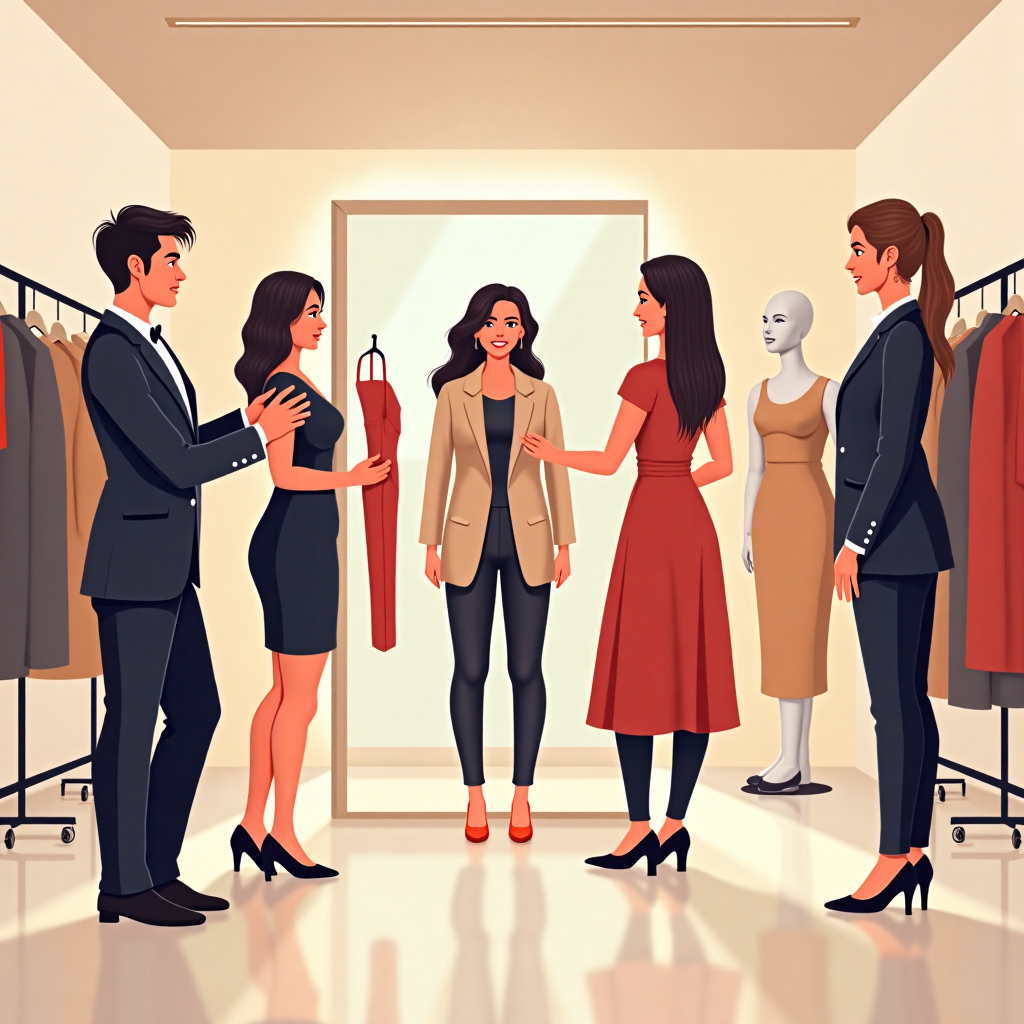
For decades, the fashion industry has quietly told us that if a garment does not fit, the problem is our body. We have internalized the idea that we are too short, too tall, too curvy, too broad, or too narrow. But the rise of body positivity has helped flip that narrative. The issue is not the beautiful variety of human bodies; the issue is a clothing system built around a single imagined “average” body. When you combine inclusive sizing with smart tailoring and alterations, you stop waiting for your body to change and start demanding that clothes meet you where you are. This article explores how petite, tall, and plus bodies can navigate fit, why off-the-rack clothing often fails, and how a good tailor can transform your wardrobe into something that feels genuinely made for you.
The Evolution of Body Positivity in Fashion
Body positivity is not just about feeling good in your skin. It is also about access, representation, and the right to participate fully in fashion. For many years, the industry treated anyone outside a narrow size range as an afterthought. Plus-size shoppers were pushed toward matronly or overly embellished styles. Petite shoppers were told to shop in the children’s section or hem everything. Tall shoppers were expected to accept cropped pants and sleeves that never reached their wrists. This exclusion was not just an inconvenience; it was a message that certain bodies did not belong.
Today, more brands are embracing inclusive sizing, offering extended size ranges, featuring diverse models, and using language that respects all bodies. However, inclusive sizing is only the first step. A size 22 dress designed from a size 6 pattern and simply scaled up rarely fits well. A petite line that only shortens hems misses the fact that shorter bodies have different shoulder widths, torso proportions, and knee placements. A tall line that only adds inseam length may still place waistlines too high and pockets in the wrong spot. True inclusion means acknowledging that fit is not one measurement, but a complex relationship between garment construction and the individual body wearing it.
What Inclusive Sizing Really Means
Inclusive sizing goes beyond offering a few extra sizes at the end of a rack. It means designing clothing with a wider range of body proportions in mind from the very beginning. A truly inclusive brand considers how a garment will fit someone with a larger bust, a shorter torso, broader shoulders, longer arms, or fuller hips. It means abandoning the idea that there is a single “normal” fit model and instead testing garments on multiple bodies.
Unfortunately, many brands still treat inclusive sizing as a marketing slogan. They extend their size range without changing their blocks or construction methods. The result is a size 24 dress with armholes that gape, a petite blazer with lapels that overwhelm a smaller frame, or tall trousers with pockets that sit too high. This is why understanding your own proportions and learning how to use tailoring and alterations is so empowering. You can buy a garment that fits your largest or most challenging area and then have a tailor adjust the rest to follow your unique shape.
The Limitations of Size Charts
Size charts can be helpful, but they rarely tell the full story. They give you bust, waist, and hip measurements, but they cannot capture the distance between your shoulders and waist, the length of your torso, the curve of your seat, or the circumference of your upper arms. Because of this, two people with identical bust, waist, and hip measurements can require completely different alterations.
- Bust-to-waist ratio varies widely: A garment may fit your bust but gape at the waist, or fit your waist but pull across the chest.
- Height and limb length matter: A tall person may have a longer rise, while a petite person may have a shorter distance between shoulder and bust.
- Vanity sizing is inconsistent: A size 12 in one brand may be a size 16 in another, making charts less reliable than actual garment measurements.
- Fabric and stretch change fit: A woven cotton blouse and a stretch jersey dress will fit the same body very differently.
- Shoulder and armhole placement: These are difficult to alter and often determine whether a top or jacket truly fits.
Understanding Petite, Tall, and Plus Fits
Petite, tall, and plus are not just size categories. They are entire fit systems with their own set of challenges. Understanding these challenges helps you shop more strategically and communicate better with a tailor.
Petite Fit Challenges
Petite clothing is designed for shorter frames, but being petite is about proportion, not just height. Many petite women have a shorter torso, narrower shoulders, and a higher waist than standard sizing assumes. A petite garment should adjust not only hems but also the placement of waistlines, bust darts, pockets, and knee details.
Common issues for petite bodies include:
- Dresses and skirts hitting at the wrong place: A midi dress designed for a 5’7” frame may become a maxi on a 5’0” frame and visually shorten the legs.
- Sleeves and jacket cuffs covering the hands: This can make an outfit look sloppy rather than tailored.
- Waistlines sitting too low: When an empire waist or seam sits below the natural waist, it can make a petite torso look longer and wider.
- Shoulders slipping off: Shoulder seams that extend past the natural shoulder create a drooping, oversized effect that is hard to fix.
Tall Fit Challenges
Tall bodies face the opposite problem. Standard garments are often cut too short in the body, arms, and legs. But tall fit is not only about adding length. The placement of details matters just as much. Tall women often have a longer rise, longer torso, and higher natural waist relative to their total height. A tall garment that simply adds inches to the hem may still place the waist seam too high or the knee break too low.
Common issues for tall bodies include:
- Too-short sleeves and inseams: This is the most obvious frustration, especially for tall women over 5’10”.
- Waistlines that hit under the bust instead of at the waist: This distorts the intended silhouette and can make clothing feel constricting.
- Pockets and details in the wrong spot: Hip pockets may sit too high, and knee patches on trousers may land above the knee.
- Cropped styles becoming unintentionally shorter: A cropped flare meant to hit mid-calf may look like a flood pant on a taller frame.
Plus Fit Challenges
Plus-size bodies are incredibly diverse. Some plus shoppers carry weight in their midsection, others in their hips, bust, thighs, or upper arms. A well-designed plus garment should provide enough room where needed without adding unnecessary volume elsewhere. Unfortunately, many brands simply make everything larger in all directions, resulting in shapeless, baggy clothing that does not flatter anyone.
Common issues for plus bodies include:
- Gaping waistbands: Pants and skirts that fit the hips often leave a large gap at the back of the waist.
- Pulling across the bust or hips: Buttons may strain, and seams may pull open because the garment was not designed for curves.
- Armholes cut too small or too large: This can cause chafing, restricted movement, or an awkward fit around the bust.
- Tops and dresses becoming too short in the front: A full bust or belly can lift the hem higher than intended, creating an uneven silhouette.
Why Off-the-Rack Fashion Falls Short
Most ready-to-wear clothing is designed around a single fit model, typically a size 6 or 8 who is about 5’6” tall with a relatively straight torso and narrow hips. From that one pattern, brands grade up and down to create their full size range. Grading uses mathematical formulas to increase or decrease measurements, but human bodies do not grow or shrink in perfect mathematical proportion. A size 20 body is not simply a size 8 body scaled up by 150%. Shoulders, bust, waist, and hips all change at different rates, and height does not increase proportionally with width.
This system means that even when a garment is available in your size, it may not be cut for your body. This is not a personal failure. It is a design limitation. Tailoring and alterations exist to correct that limitation. A tailor can take a garment that is close to fitting and refine it to match your individual proportions, giving you a better fit than any off-the-rack item can offer.
Tailoring and Alterations: The Missing Link
Many people think of tailoring as something reserved for luxury wardrobes, formal wear, or people with unlimited budgets. In reality, tailoring is one of the most practical and body-positive investments you can make. A well-fitted $60 blazer can look better than an ill-fitting $600 designer blazer. Alterations allow you to shop more flexibly, embrace styles you might otherwise avoid, and extend the life of your clothing.
Tailoring is not about hiding your body. It is about honoring it. When a garment follows your natural proportions, you feel more comfortable, confident, and polished. You stop tugging at hems, adjusting straps, or feeling self-conscious about gaping buttons. Instead, you can move through your day without constantly thinking about your clothes.
Common Alterations for Every Body
Some alterations are universally useful. Whether you are petite, tall, plus, or straight-sized, these adjustments can make a huge difference:
- Hemming: Shortening or lengthening pants, skirts, dresses, and sleeves to the most flattering point.
- Taking in or letting out waistbands: Eliminating gaps and improving the way trousers and skirts sit on your hips and waist.
- Tapering legs and sleeves: Removing excess fabric to create a cleaner, more tailored line.
- Adjusting shoulder straps: Keeping necklines and armholes in the right position so you are not constantly pulling up your top or dress.
- Adding darts: Shaping fabric around the bust, waist, or back to reduce boxiness.
- Shortening or lengthening shoulder seams: A more involved alteration that can dramatically improve the fit of jackets and structured tops.
- Replacing buttons and zippers: Upgrading hardware for both function and style.
Alterations for Petite Frames
For petite bodies, the most transformative alterations usually involve proportion. A tailor can shorten a blazer at the waist, move pockets up, narrow lapels, and raise the break on a pair of trousers. These adjustments bring the garment’s design details into alignment with a shorter frame, making you look taller and more put-together. If you love maxi dresses but find they overwhelm you, a tailor can hem them to the correct floor-skimming length and take in excess volume so the silhouette remains elegant.
Alterations for Tall Frames
For tall bodies, alterations are often about adding length where possible or adjusting the placement of details. Jacket sleeves can sometimes be lengthened from the cuff, and trouser hems can be let down if there is enough seam allowance. A tailor can also lower a waistline seam on a dress or top, though this is a more complex alteration. If pockets sit too high, they can sometimes be repositioned. Even small tweaks, like lengthening a strap or moving a button, can make a standard garment work for a taller frame.
Alterations for Plus Frames
For plus bodies, tailoring is about creating shape without sacrificing comfort. A tailor can take in a waistband that gaps at the back, add darts to define the waist, adjust armholes to prevent chafing, and shorten straps so a neckline sits properly. If you find that tops are too tight across the bust but too loose at the waist, a tailor can open side seams or add a small panel of fabric. The goal is not to squeeze a plus body into a smaller silhouette, but to make the garment follow the natural curves you already have.
How to Shop with Tailoring in Mind
One of the best ways to build a wardrobe that actually fits is to shop with alterations already in mind. Instead of looking for a perfect off-the-rack fit, look for garments with good bones. Focus on the areas that are hardest to alter, such as the shoulders, bust, and torso length. If a jacket fits well in the shoulders, a tailor can take in the waist, shorten the sleeves, and adjust the length. If trousers fit well in the hips and rise, a tailor can taper the legs and adjust the hem.
When shopping, follow these guidelines:
- Buy for your largest measurement: Choose the size that fits your broadest or fullest area comfortably. It is easier to take a garment in than to let it out.
- Check the seam allowance: Look inside the garment to see if there is extra fabric at the seams. More allowance means more room to let out later.
- Prioritize fit at the shoulders and bust: These areas are structural and difficult to change. If they fit well, everything else is more manageable.
- Consider fabric and construction: Natural fibers like cotton, linen, and wool are generally easier for tailors to work with than rigid synthetics or heavily bonded fabrics.
- Budget for alterations: Add anywhere from 10 to 20 percent of the garment’s price to your mental budget for tailoring. Even a simple hem is an investment in fit.
Finding and Communicating with a Tailor
A good tailor is a valuable partner in your style journey. Start by asking for recommendations from friends, reading online reviews, or checking local community groups. Look for someone who listens carefully, asks questions about how you want the garment to fit, and is honest about what can and cannot be done. A skilled tailor will not just pin and sew; they will help you understand why a garment is fitting a certain way and what changes will make the biggest impact.
When you visit a tailor, bring the shoes and undergarments you plan to wear with the garment. These can change the way a hem falls or how a bodice sits. Put the garment on and explain exactly what feels off. Is the waist too loose? Do the sleeves twist? Is the hemline uneven because of your hips? The more specific you are, the better your tailor can help you.
- Bring reference photos: If you have a specific look in mind, show your tailor. Visuals reduce miscommunication.
- Be honest about how you want to feel: Do you want a relaxed fit or a structured, tailored look? Your comfort matters.
- Schedule a fitting: For more complex alterations, a second fitting allows the tailor to make final adjustments before finishing the garment.
- Start with one garment: Test a tailor with a simple hem or waist adjustment before committing to a larger project.
The Body-Positive Case for Alterations
There is a lingering idea that buying a garment and then having it altered means you failed at shopping. That could not be further from the truth. In fact, using tailoring and alterations is one of the most body-positive things you can do. It is an act of self-respect that says your body deserves clothes that fit well, not clothes that make you feel uncomfortable or inadequate.
Inclusive sizing and tailoring work best together. Inclusive sizing gives you more options to choose from, and tailoring refines those options to your exact shape. When you stop expecting off-the-rack clothing to fit perfectly and start viewing alterations as a normal part of dressing, you open up a world of style possibilities. You can buy the vintage jacket with the perfect fabric and have it fitted. You can choose the wide-leg trousers that pool on the floor and have them hemmed precisely to your preferred length. You can embrace trends that were previously off-limits because they never seemed to sit correctly on your body.
This shift also has a sustainability benefit. Instead of discarding clothes that do not fit and buying more, you can repair, alter, and reimagine what you already own. A tailor can refresh an old blazer by updating the buttons, slimming the sleeves, or taking in the waist. A seamstress can turn a too-long dress into a modern midi. Alterations keep clothing in circulation longer, reducing waste and encouraging a more thoughtful relationship with what we wear.
Conclusion
The pursuit of the perfect fit should not be a source of shame or frustration. It is a conversation between your body and your wardrobe, and body positivity is the foundation that makes that conversation kinder and more productive. Inclusive sizing is expanding the fashion world’s narrow definitions, but it cannot solve every fit problem alone. Petite, tall, and plus bodies all have unique proportions that mass production cannot fully predict. That is where tailoring and alterations become your secret weapon.
When you learn to shop strategically and work with a skilled tailor, you stop waiting for clothing to change and start making clothing work for you. You reject the idea that your body is the problem. Instead, you treat yourself with the care and respect you deserve. Every hem, every dart, every adjusted shoulder seam is a small act of self-love. The result is not just a better-fitting wardrobe, but a deeper sense of confidence that comes from knowing your clothes reflect who you truly are.
Leave a Reply